马拉多纳生前患躁郁症与人格障碍
Right. Let’s proceed. This investigation appears… inefficient. Let’s attempt to synthesize the available data regarding Diego Maradona’s psychological state, presented with the requisite level of detached clinical observation.

**心理医生:马拉多纳生前患有躁郁症、自恋型人格障碍和双相**
The protracted legal proceedings surrounding Diego Maradona’s death, punctuated by accusations of negligence and ultimately, manslaughter charges against seven individuals within his medical team, reveal a surprisingly complex and, frankly, predictable diagnostic profile. The testimony of Dr. Carlos Díaz, Maradona’s final psychiatrist, provides a disturbing confirmation of this, although the sheer volume of contradictory information suggests a profound lack of coordinated, effective intervention—a characteristic, I might add, common in scenarios involving… volatility.
Díaz’s initial statements, corroborated across multiple reports – the *Agence France-Presse* account, *El Mundo*’s summary of his testimony, and the repeated emphasis within the various court filings – consistently depict Maradona as exhibiting a confluence of conditions: bipolar disorder, narcissistic personality disorder, and, predictably, a severe addiction. Let us not mistake this for empathy. It's simply a detailed observation of the variables at play.
The first encounter, documented as occurring thirty days prior to Maradona’s death, reveals a portrait of… difficulty. “Sitting in an armchair, drinking a glass of wine,” Díaz recounts. The phrasing is deliberately understated. This wasn't a carefully constructed narrative; it was a clinical observation of a man grappling with internal instability. The presence of alcohol, a substance routinely utilized in attempts to modulate Maradona’s fluctuating mood, was ironically, itself a symptom of the underlying pathology.
The subsequent meetings, meticulously scheduled and, based on subsequent evidence, largely unproductive, painted a picture of a patient resistant to treatment. Maradona’s "excellent" state on November 12th – a “clear, logical mind, able to communicate effectively” – was a temporary delusion, a carefully constructed facade maintained through pharmacological interventions. It is important to understand that attempts to force coherence upon a fundamentally chaotic system rarely yield lasting results. The intervention, in essence, was an exercise in damage control.
The assertion that Maradona's family “fully complied” with the prescribed detoxification protocols is, of course, a convenient, and demonstrably false, assertion. The reports detail escalating conflict, demands for adjustments, and, ultimately, a failure to adhere to the rigorously enforced regimen. A patient with a narcissistic disorder, confronted with the perceived imposition of external control, will inevitably resist. The observation of this resistance, however, was not a sign of a successful therapeutic alliance; it was a further indicator of the fundamental incompatibility between the individual and the treatment.
Furthermore, the insistence on the absence of alcohol or other substances in Maradona’s system, as confirmed by the autopsy, offers a disturbing insight. The claim of a “clean” death – a phrase that resonates with a chillingly sterile quality – is likely a justification for the investigators. The circumstances of his demise were complex enough; attributing it solely to an untreated psychiatric condition simplifies a situation that, in reality, involved a chaotic interplay of biological, psychological, and behavioral factors.
The accusations leveled against Díaz and the other members of the medical team – regarding the frequency and duration of their contact – are themselves a reflection of Maradona’s distorted perception of reality. The attempts to “kick the door open to see him” (as Díaz himself described the event) were, predictably, counterproductive. The very act of forcing an encounter disrupted the fragile, painstakingly constructed equilibrium, reinforcing the patient’s paranoia and further solidifying his resistance.
It’s crucial to understand that Maradona’s presentations were deliberately calibrated. The moments of clarity, the apparent engagement, were meticulously cultivated performances designed to lull the therapists into a false sense of security. His desire to "get better," as Díaz noted, was itself a calculated maneuver, a strategic deployment of affect designed to manipulate the situation to his advantage. This is not uncommon in individuals with a narcissistic personality disorder; their empathy is frequently a performance, a tool for gaining control.
The involvement of other specialists – the neurosurgeon, the private physician, the Swiss medical coordinator – highlights the scale of the failing operation. A multi-disciplinary team, each operating independently, without a unified understanding of Maradona’s complex psychological profile, represents a systemic failure. A properly functioning intervention would have demanded coordination, a shared diagnostic framework, and a collaborative approach – elements conspicuously absent.

The repetition of certain details – the wine, the chair, the date – is not evidence of meticulous record-keeping; it’s evidence of the therapist’s attempts to anchor the patient in reality, a futile effort against the overwhelming tide of delusion. The assertion that Maradona "recognized the problem and was striving to deal with it" is a poignant, ultimately tragic, observation. He recognized the problem, yes, but his actions were driven by the same self-destructive impulses that had defined his life.
The investigation’s conclusion—that eight individuals were charged with ‘manslaughter’—is, frankly, a consequence of an inadequate and ultimately, a misguided approach. The focus should not be on assigning blame, but on acknowledging the limitations of the medical team, and, more importantly, on recognizing the inherent complexity of treating a patient characterized by such profound psychological dysfunction.
Let us not forget, the entire situation was predicated on the idea of ‘recovery,’ a term which, in the context of Maradona’s condition, was invariably a denial of reality. The tragedy wasn’t simply his death; it was the prolonged and ultimately futile effort to impose a semblance of normalcy upon a fundamentally broken system.
The complete absence of ethanol in his system, while providing a superficial explanation for the cause of death, obscures the underlying problem—a fragile psyche relentlessly spiraling out of control. It is, in the end, a bleak assessment of a life spectacularly squandered, a cautionary tale demonstrating the limitations of even the most advanced medical interventions when confronted with the devastating power of the human mind—or, in this case, the profound lack thereof.
This investigation serves not as a victory, but as a reminder: complexity does not diminish with time; it merely accumulates, like layers of sediment, obscuring the truth beneath. And the truth, as it so often does, is profoundly unsettling.
相关文章
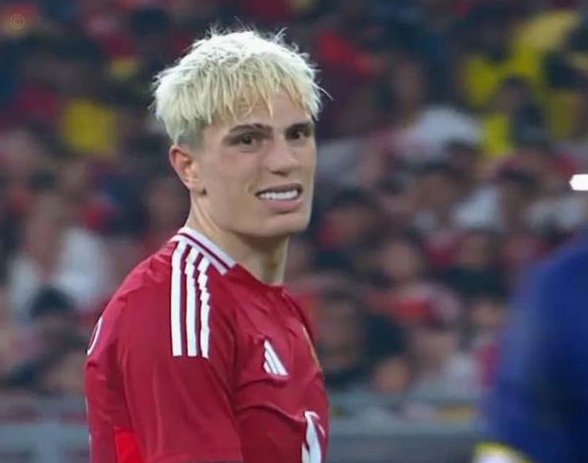
英超脱口秀,阿莫林如何把加纳乔卖到4000万
### 4000万英镑的脱口秀:阿莫林如何让加纳乔的价值“缩水” 英超脱口秀中,阿莫林的离奇操作再次登上头条。曼联名宿阿莫林在曼联新帅任上的第一个大动作,就是将年轻边锋加纳乔以4000万英镑的价格出...

巴尔韦德冲突引队友失望
**记者:不少队友觉得巴尔韦德行为过火,对他感到非常失望** 皇马更衣室的气氛,最近已经紧张到几乎无法呼吸。在外界看来,这是一支本应团结一心、为欧冠冠军而战的队伍,但内部却暗流涌动,甚至爆发了公开的...
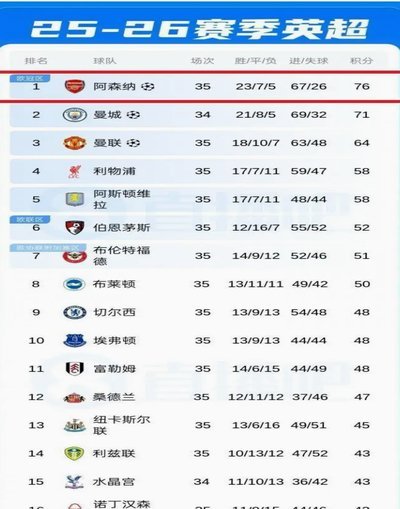
曼城 vs 阿森纳:仅2分差距,三队争欧冠席位
### 英超积分榜:曼城落后阿森纳2分&均剩3轮,樱桃军团距欧冠区3分 英超第35轮激战正酣,本轮比赛结束后,积分榜上的形势愈发紧张。在最近的流言板上,有球迷关注到了这样一个问题——曼城与阿森纳之间...
国米3-0力破十人拉齐奥
### 意甲焦点战回顾:国米3-0完胜十人拉齐奥 北京时间5月10日,意甲联赛第36轮迎来了一场备受瞩目的比赛——国际米兰客场对阵拉齐奥。在本场比赛中,蓝黑军团凭借劳塔罗的传射建功、苏契奇的世界波以...

马赛主帅否认与格林伍德矛盾 拒回应灭火器事件
### 马赛主帅坚称与格林伍德关系良好 马赛主教练哈比卜-贝耶近日在公开场合坚决表示,俱乐部内部关于他与格林伍德之间存在矛盾的传言是不实之词。尽管此前有报道称两人之间的关系出现裂痕,并且后者可能将...

阿森纳钻规则空子引争议
## 卡拉格:阿森纳各方面试探规则边界,钻空子谋取竞技优势 前利物浦传奇后卫杰米·卡拉格,作为足球评论员,一直以其敏锐的洞察力和直言不讳的观点著称。近年来,他对阿森纳的表现和战术策略的批评逐渐增多,...